There are two 7800 models, and two revisions within one of the models.
NTSC 7800 (1986-1992)
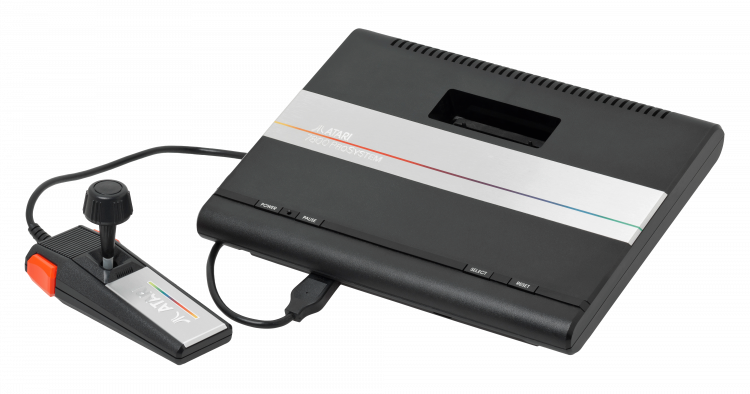
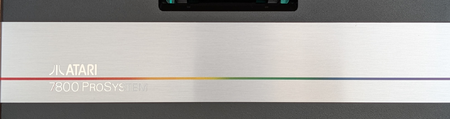
The Atari 7800 first made its market debut in North America in May 1986, two years after its initial announcement. All NTSC 7800s only have RF output and have a faceplate with a thin rainbow and embossed "Atari 7800 ProSystem" text on the left. In addition, all NTSC 7800s have a BIOS containing an authentication scheme which checks for a "signature" in the inserted game to determine if the game is a 7800 cartridge or not. This also doubled as a security check to prevent unauthorized 7800 games from being played, although this was eventually cracked in the early 2000s to allow for the development of homebrew games.
Expansion Port Model (1984, 1985, 1986-1987)
 |
 |
 |
 |
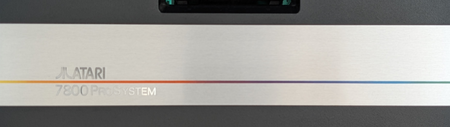 |
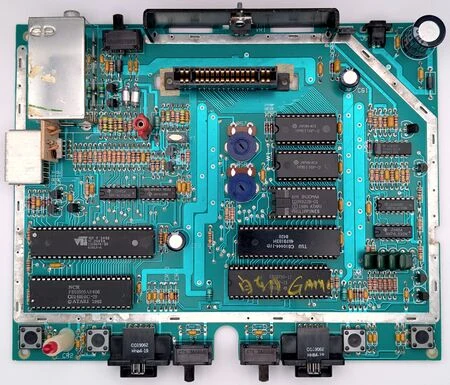
The original version of the NTSC 7800. Some of these consoles were from the original Atari Inc. production run from 1984, which had to cease production due to a corporate switchover. These particular consoles were produced at Atari factories in El Paso, Texas and Taiwan, though none were sold until the 7800's launch in May 1986. Atari also produced a small number of consoles in 1985, though these mainly used parts made during the initial 1984 production run.[1] All of these consoles have the initial C025233-001 motherboard revision.
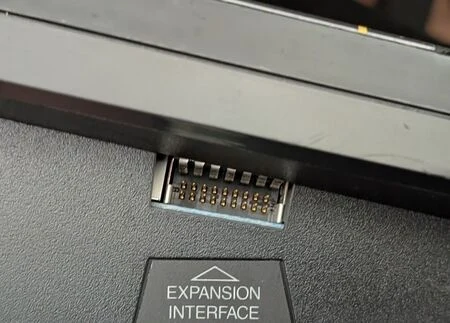
The only major external difference to later runs is the presence of an unused expansion port on the left side, originally intended for a planned LaserDisc add-on. This expansion port mostly has video-related signals and does not provide an interface to the main system bus, severely limiting its use.
When Atari resumed 7800 production again in late 1986, they continued producing consoles with the expansion port until some time in late 1987. Some later expansion port models, mainly those produced in mid-1987, do not have the "Expansion Interface" label below the port. Some also have a revised motherboard (C025233-002) that incorporates a timing circuit intended to fix compatibility issues with certain Atari 2600 games like Kung-Fu Master and Dark Chambers (released after this change was made). However, this timing circuit introduces other 2600 compatibility problems, namely with Activision games like The Activision Decathlon, Robot Tank and Space Shuttle: A Journey Into Space. For more information, see this page. Some C025233-002 boards (such as the one pictured above) do not have the timing circuit fully populated and only have a 0 ohm jumper where pins 2 and 4 of U13 (74LS02) would normally be, giving them similar compatibility to older 7800s.
No Expansion Port (1987-1992)
 |
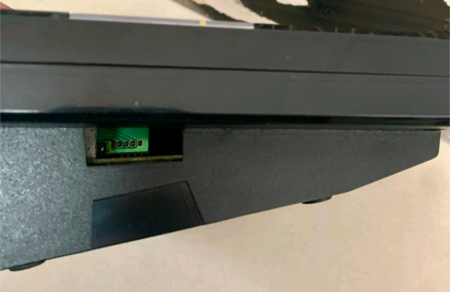 |
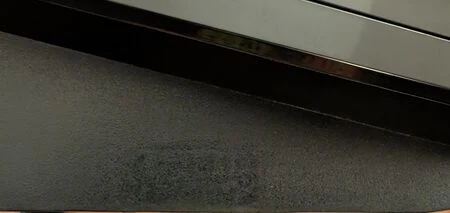
Nearly identical to earlier 7800s, except the expansion port was omitted to save costs (though the motherboard footprint remains). Most of these variants were manufactured in Taiwan with later units being manufactured in China. Some of these consoles have an indent or blemish located where the port label used to be, and some even still have an opening for the port, but with no actual port populated on the board. However, most consoles without the expansion port have no outward evidence of where the port was. All of these consoles have the C025233-002 board revision with the extra timing circuit that causes compatibility issues with certain 2600 games.
PAL 7800 (1989-1993)
 |
 |
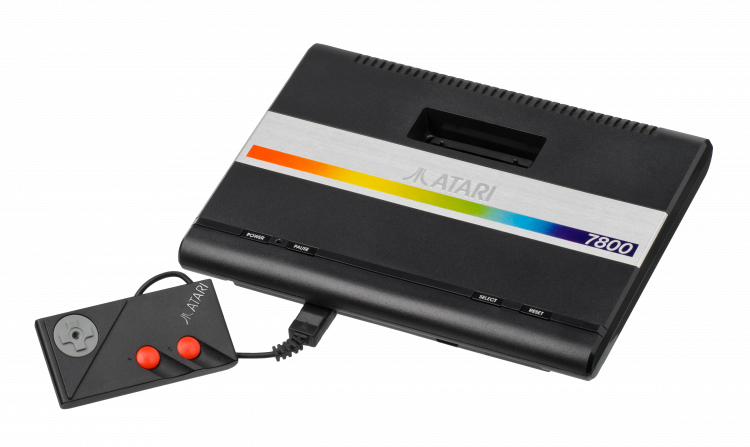
The Atari 7800 was not released in PAL regions until 1989, over three years after its initial release in North America. PAL 7800s feature a different faceplate than NTSC models, which looks similar to that used on most 2600 Jr. consoles, and have a green power LED instead of red. They are otherwise very similar to NTSC consoles and also only have RF output. However, 7800s sold in France eschewed RF output in favor of a 13-pin DIN connector that outputs RGB, though this is actually composite video decoded to RGB and is not true RGB. The pinout of this connector is almost identical to that used on the Atari ST computers, which used the same type of connector for video output.
Instead of having Pole Position II as a pack-in, all PAL 7800s have Asteroids built-in, which automatically comes up when the console is turned on without a game (or if it fails to detect an inserted cartridge). They also do not perform the encryption check that NTSC 7800s do and boot straight into the game without the Atari logo splash screen. The lack of an encryption check means that PAL 7800s can boot NTSC 7800 games, but not all will work properly due to the differences between NTSC and PAL MARIA graphics chips.
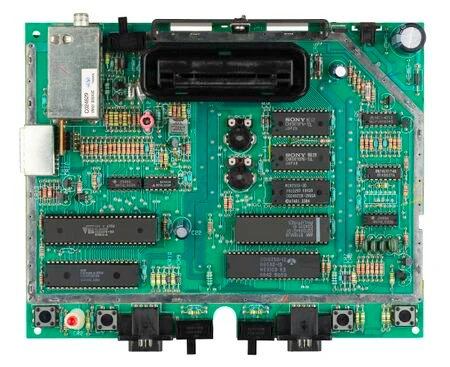
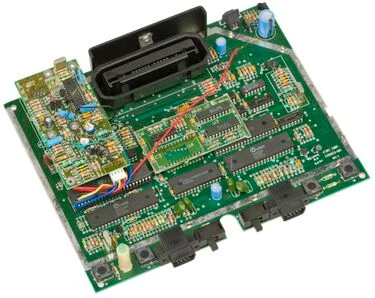
All PAL consoles have the C300633-001 board revision, which was not used in NTSC consoles (though it can accommodate NTSC TIA and MARIA chips). While the NTSC 7800 was discontinued by the beginning of 1992, the PAL 7800 continued in production until mid-1993.[2]
Links
- https://en.wikipedia.org/wiki/Atari_7800#System_revisions
- http://www.ataricompendium.com/game_library/easter_eggs/7800/78prosystem.html