The following information and images have been sourced from Shank's Wii Super Thread on Bitbuilt.
RVL-001 Motherboards
RVL-CPU-01
Description
This is the motherboard used in launch consoles. It has a six layer PCB, 90 nm Hollywood SoC, 90 nm Broadway A CPU, and the highest power consumption compared to all future motherboards.
Some batches of the 90 nm Hollywood SoCs used in the first three board revisions of the Wii (like this one) also developed graphical artifacting issues overtime, but on the Wii it wasn't as easily noticed compared to other chipsets due to the comparatively low TDP of the Hollywood. Similarly to the Xbox 360 GPU, the Hollywood's main die (codenamed Vegas, which has the GPU and ARM9 "Starlet" CPU) also has a small amount of eDRAM, and when the eDRAM fails, it causes graphical artifacts to be visable.
It has been theorized by some that, since the ARM9 processor in the SoC handles the instructions of WiiConnect24 while in standby mode with the fan turned off, the SoC gets too hot and can cause the eDRAM to fail. This can easily countered by just having WiiConnect24's standby connection setting turned off, or less boringly by performing a fan mod.
Images
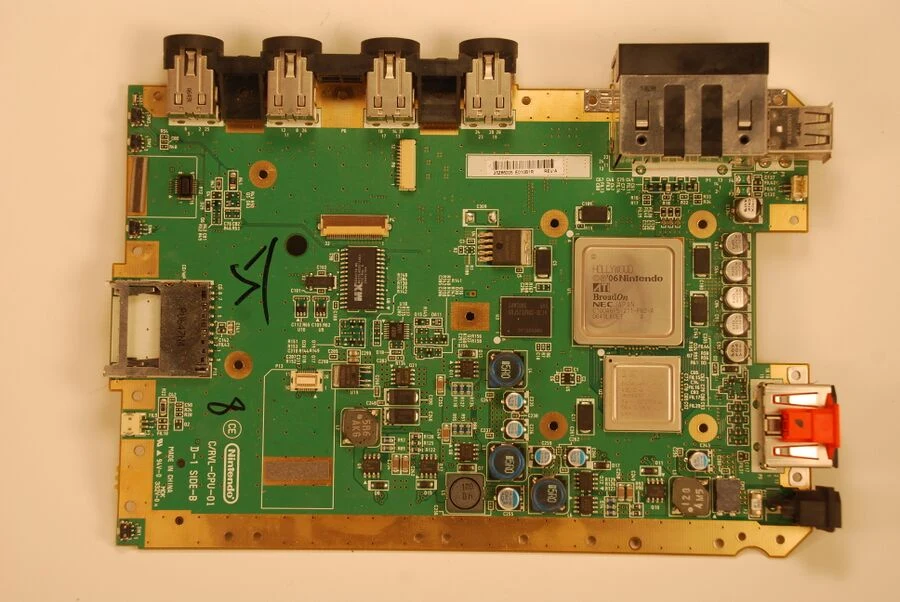
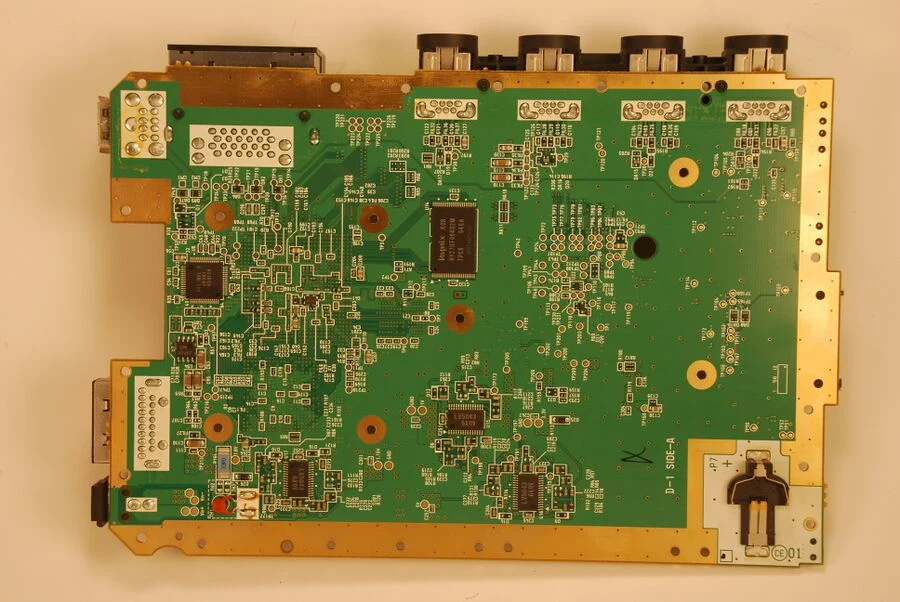
Board Scans
The following high quality board scans have been supplied by the late scene developer Ben "Bushing" Byer.
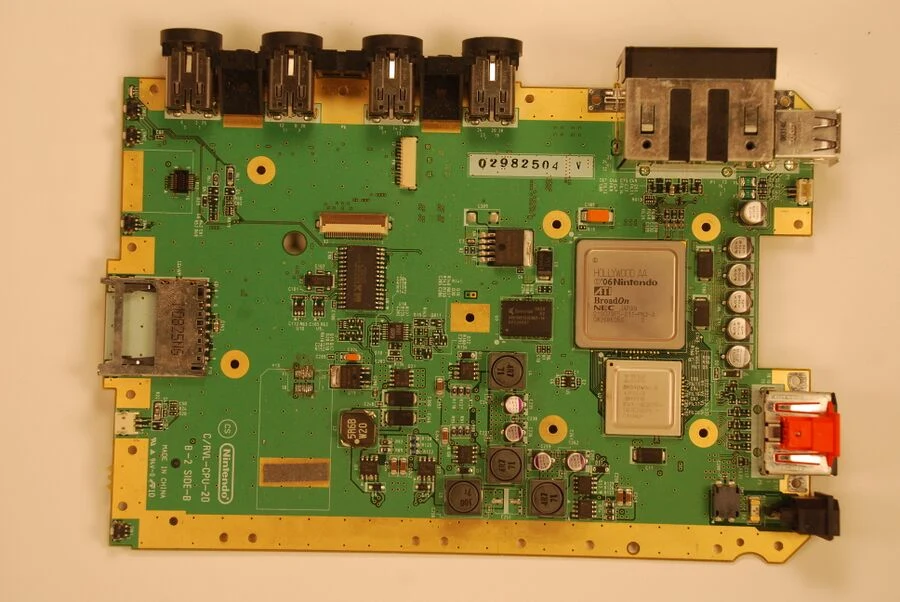
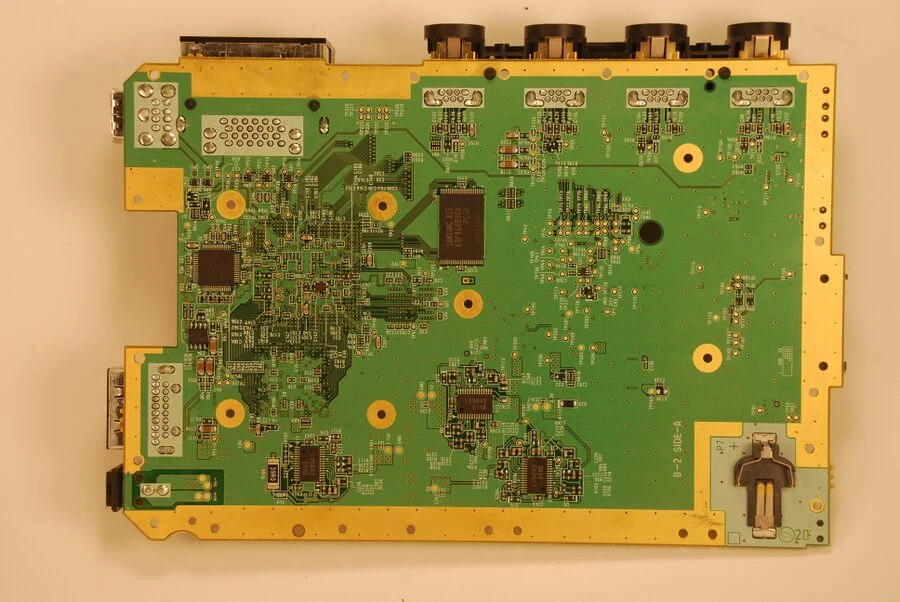
RVL-CPU-20
Description
Minor tweak to the RVL-CPU-01. It didn't change much aside from CPU, as it was shrunk to the 65 nm process node with the Broadway B revision. The SoC also had a slight revision called the Hollywood AA.
The efficiency was slightly increased from the new CPU, but not by much due to the Hollywood having far more functions and thus being the component with most of the power draw (especially when playing games).
This model, as well as the following ones, were at the time popularly known as "LU64+" (after their approximate North American serial numbers) due to the hardware not being exactly timing-accurate with its previous revision, resulting in critical incompatibilities with older IOS (notably excepting the leaked IOS16 v257, and IOS15 v257) that led to expensive accidents as unaware modders followed contemporary downgrade-centric modding guides.
Images
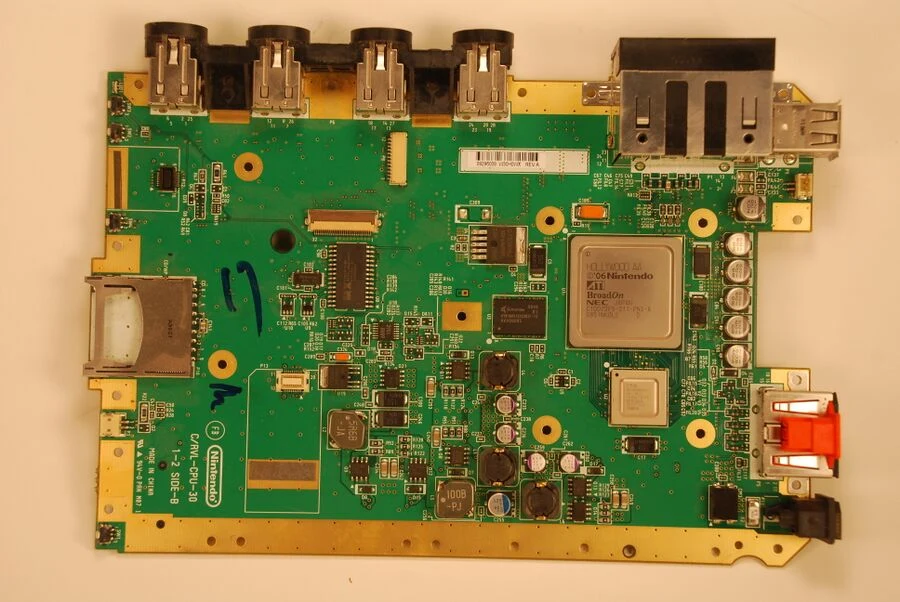
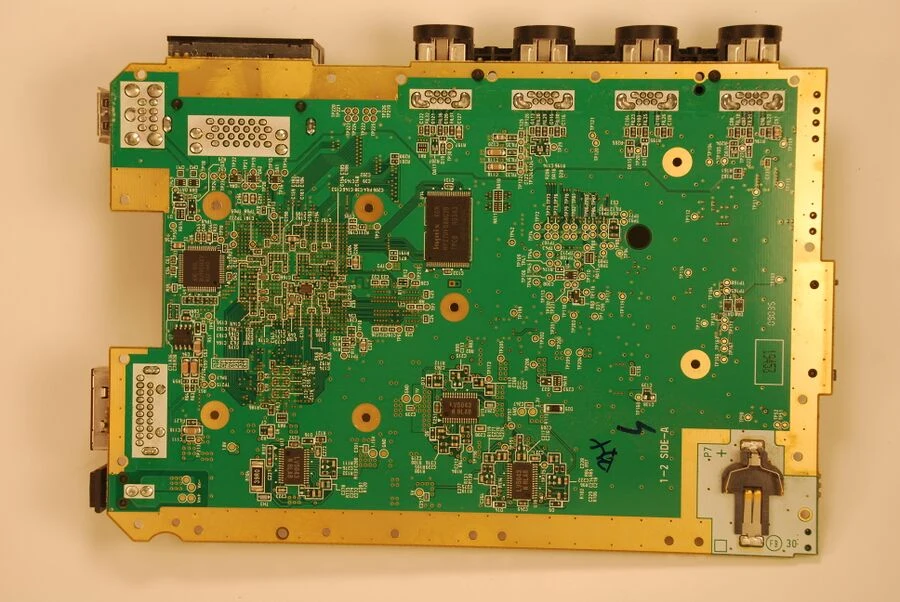
RVL-CPU-30
Description
Minor revision to RVL-CPU-20. This time, the Broadway-B CPU was changed to be the Broadway-1, which had a much smaller substrate.
Some of these motherboards also patched the boot1 bootloader from allowing access to modifications of boot2, meaning BootMii could no longer be installed early in the boot process.
Images
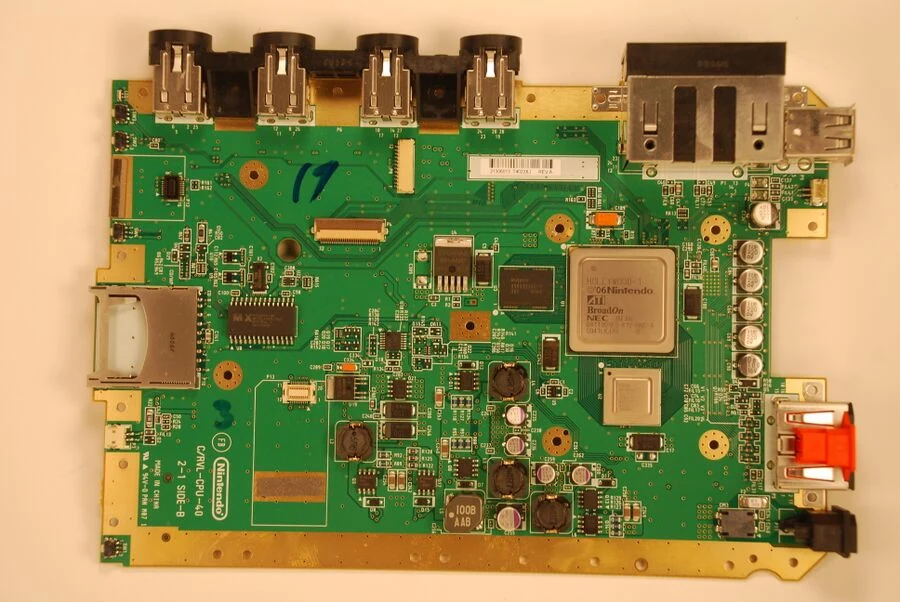
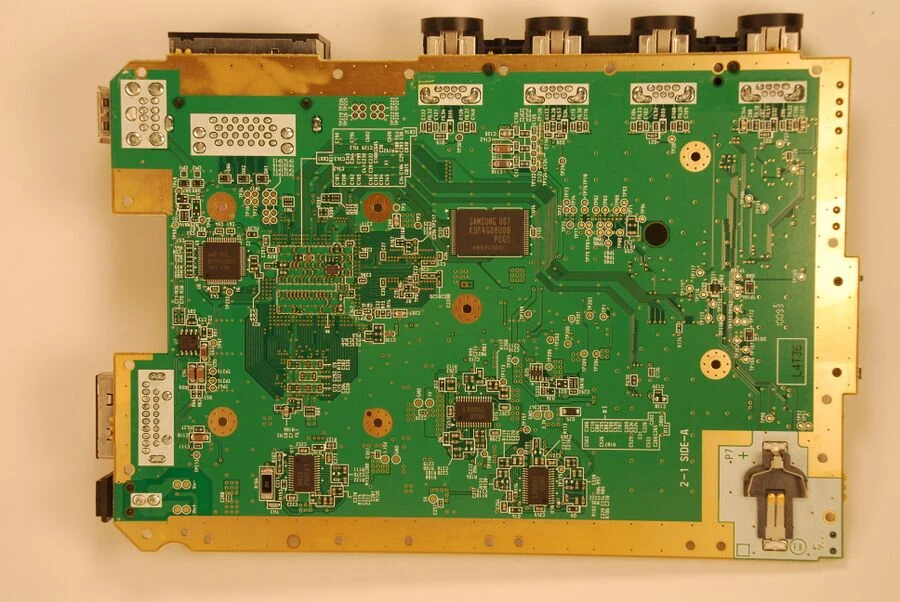
RVL-CPU-40
Description
The RVL-CPU-40 was the first major motherboard revision to the Wii, and would be the last major revision until the Wii Mini. The general layout was vastly simplified, and the PCB was reduced to being four layers for further cost-cutting.
It retains the shrunken 65 nm Broadway-1 CPU, while also featuring a new 65 nm Hollywood-1 SoC (also codenamed Bollywood). Since the SoC is the main component responsible for most of the Wii's power draw (especially during gaming, as it's what houses the GPU), the efficiency was drastically increased compared to the previous motherboards. The new SoC was also no longer effected by the defective eDRAM issue that the previous 90 nm Hollywoods had, so Wiis that featured the Hollywood-1 haven't been observerved to develop graphical artifacting issues.
Enthusiasts who intend to trim Wii motherboards to be much smaller on other projects tend to prefer RVL-001 motherboards with the Hollywood-1 (like this one) or any RVL-101 motherboard due to the much lower power draw and easier trimming procedure, as the PCB is thinner and the trimming area can be much smaller than older motherboards.
Images
RVL-CPU-60
Description
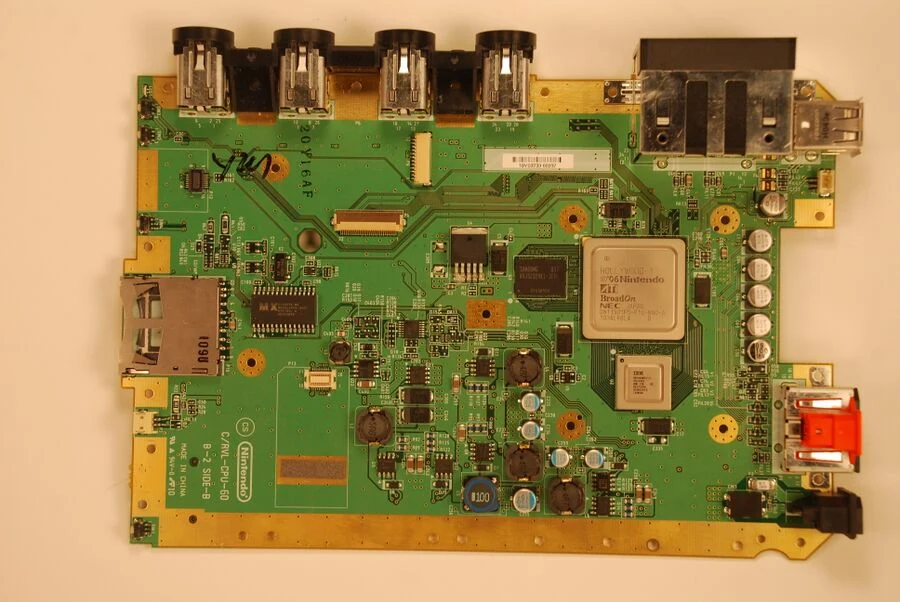
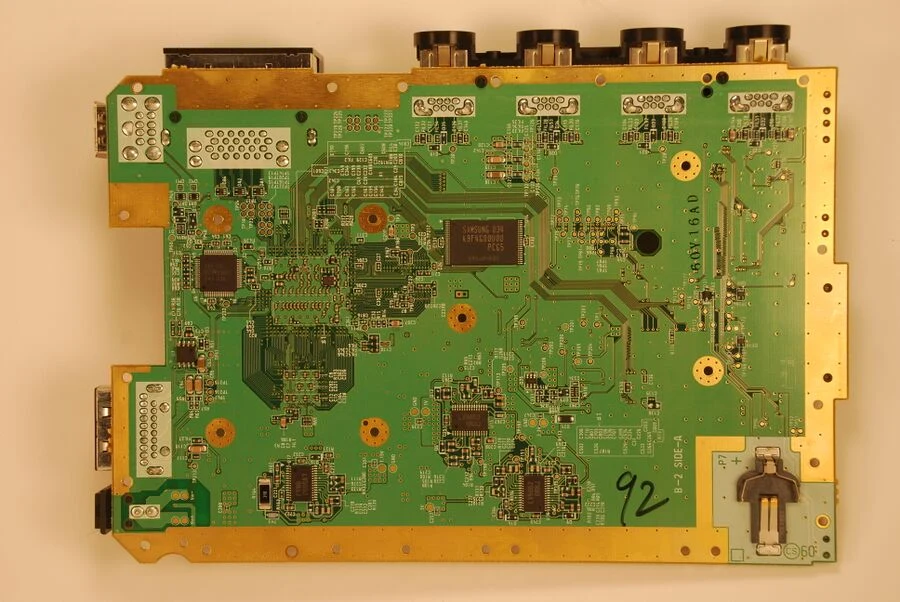
Minor revision to the RVL-CPU-40. Not much changed from the previous motherboard, aside from swapping the linear regulator responsible for the "always on" 3.3v line to a switching regulator, which further reduced power draw by a small amount.
Images
RVL-101 Motherboards
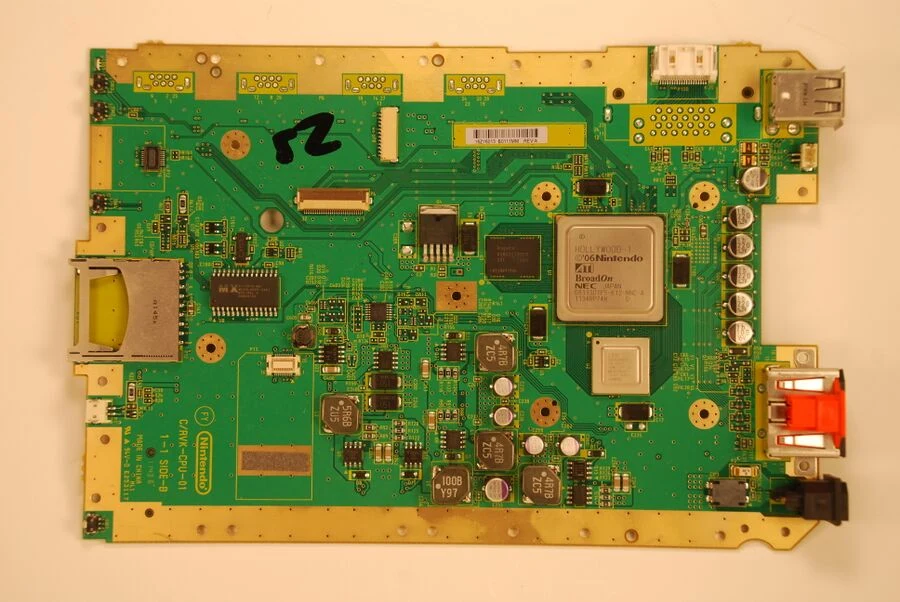
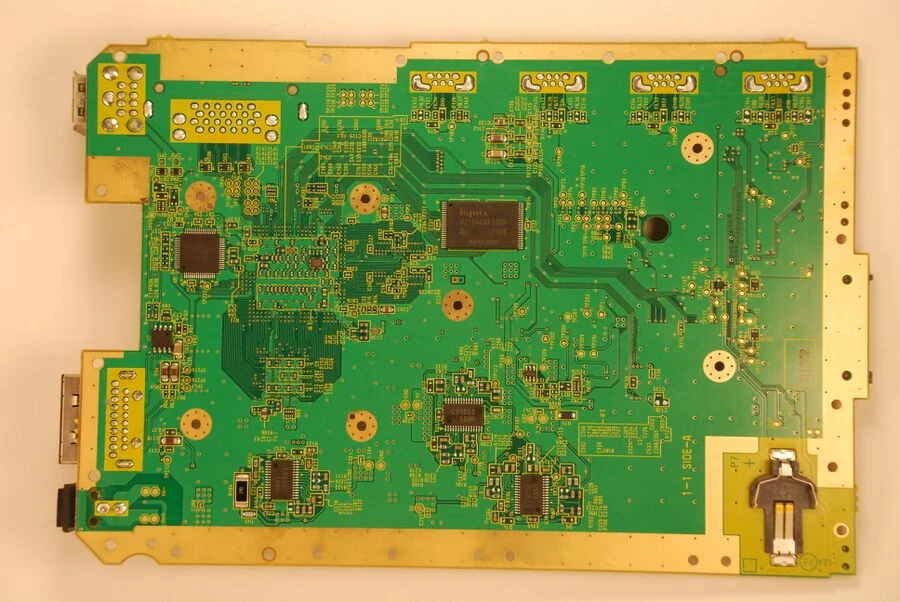
RVK-CPU-01
Description
This is the first motherboard used on the Wii Family Editions. It's essentially an RVL-CPU-60 but with the I/O for GameCube peripherals removed, with a proprietary debugging header soldered in place of where the memory card connector goes.
Images
RVK-CPU-02
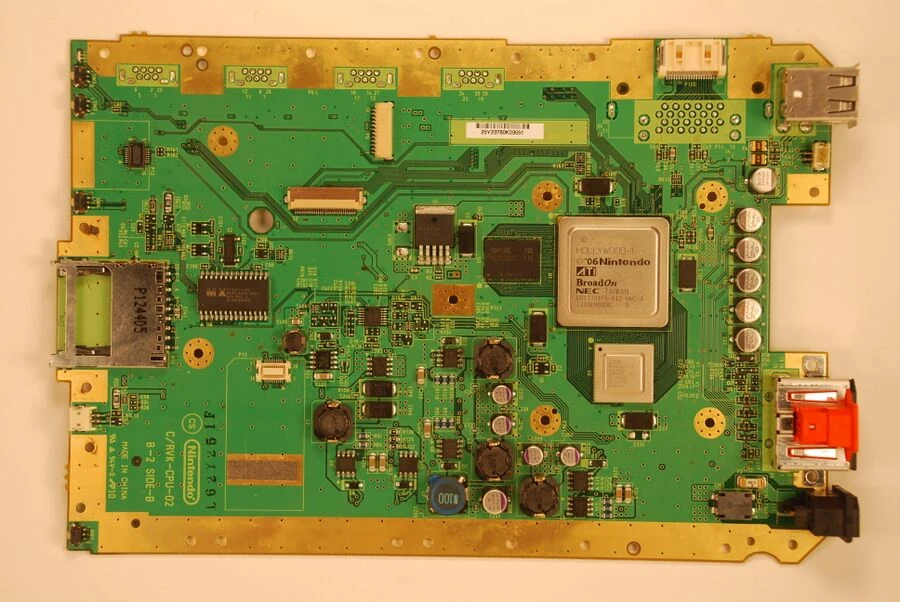
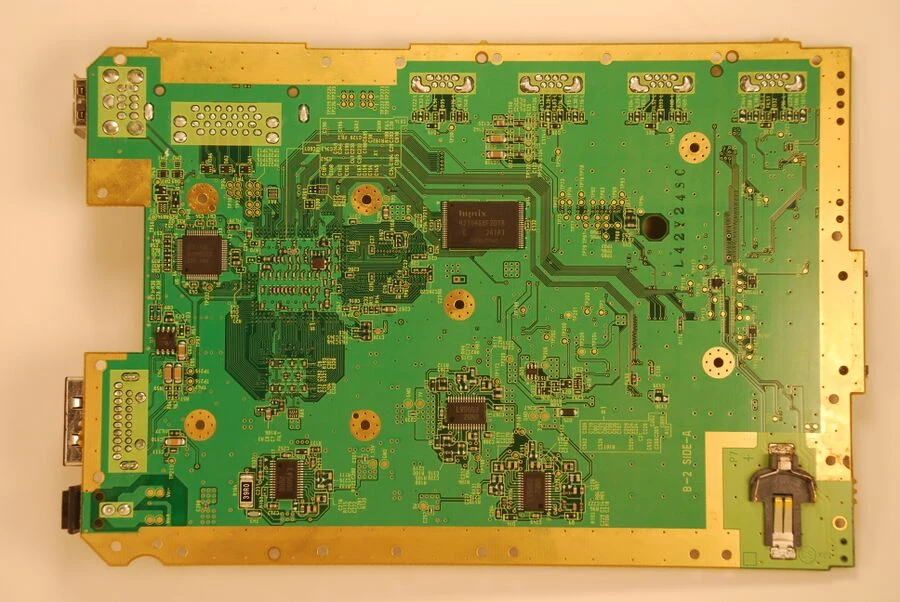
Description
This is the next revision featured in the RVL-101 consoles. There are no known differences between this and the RVK-CPU-01.
Images
RVL-201 Motherboards
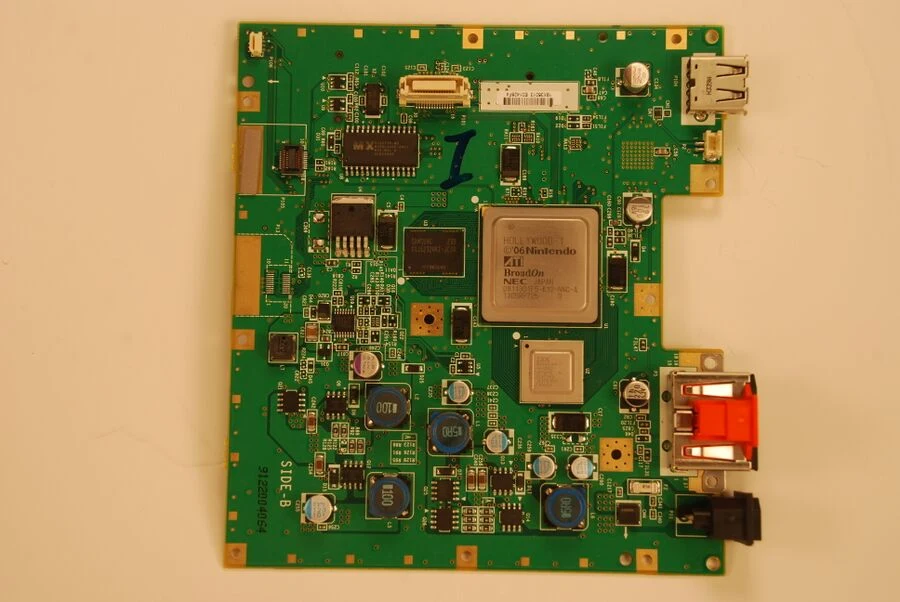
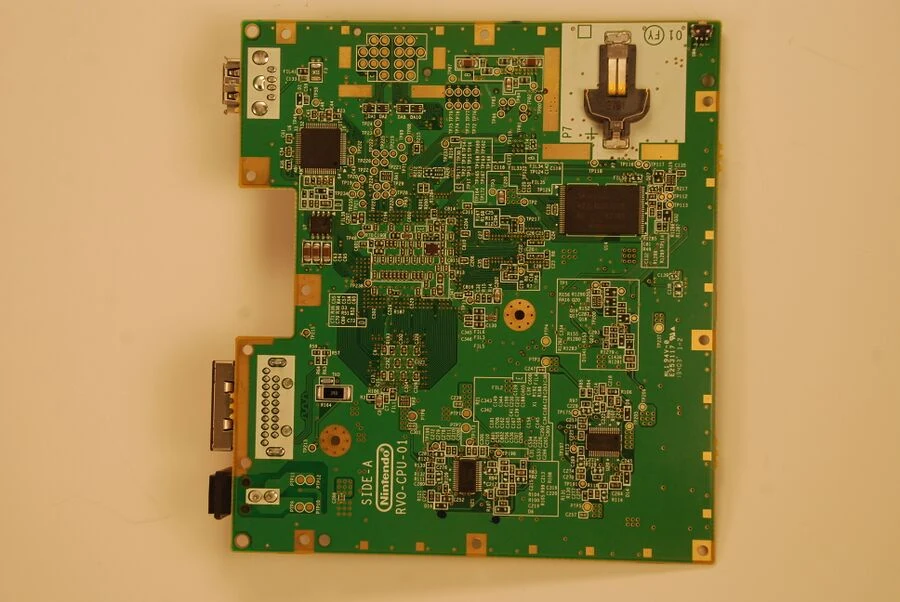
RVO-CPU-01
Description
The last ever motherboard made for the Wii as a whole, and was used for the Wii Mini. It has been drastically redesigned, simplified, and shrunken in order to both reduce the size and cost of the console.
It still retains the same 65 nm SoC and CPU that were first used on the RVL-CPU-40.
The optical drive uses a new single connector for both power and data, although it is still electrically compatible with previous disc drives if the pinout is matched. Rather large test points on the bottom provide connection points for one GameCube memory card, GC controllers 1 and 4, and the SD card slot — i.e. all external interfaces used in the manufacturing process. The lately removed Wi-Fi card socket on the top is also rather prominent.
Images