 | Board revisions with the XSB (Xenon, Zephyr and Falcon) tend to have issues with NAND switching and are therefore not supported by most Multi-NAND boards. As of today only the TX Demon supports those boards. |
Multi-NAND refers to having multiple NAND chips installed at once on one console.
Multi-NAND installs were usually used to switch between a retail NAND and a modified NAND. This was done to separate an online environment and a FreeBoot environment, thus protecting your console against a ban. Since protections against bans are nowadays robust enough to only use a modified NAND, this practice has seen a decline in popularity.
Today, a Multi-NAND may have a use case scenario to have a modern, modified dashboard and an older dashboard or a development dashboard on the same console without resorting to flash a different image each time.
NAND switching is either handled by the Multi-NAND board or the glitch chip. The X360ACE V3, for example, supports this, but requires special timing files for the NAND switching logic.
Multi-Nand Board
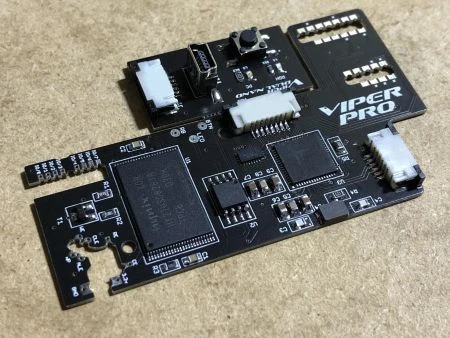
A Multi-NAND board houses the NAND itself (depending on the model, it may handle the switching logic). This way, a dual or triple NAND is possible. Supported systems and glitching methods vary.
Recommended Multi-NAND boards today are the Viper V2 Dual NAND, Viper Triple NAND and Viper Pro Dual NAND.
Nandwich
 | Installing a Nandwich requires a very high skill level in microsoldering and a massive amount of precision. Only attempt if you REALLY know what you're doing and therefore you understand the risks when doing so! |
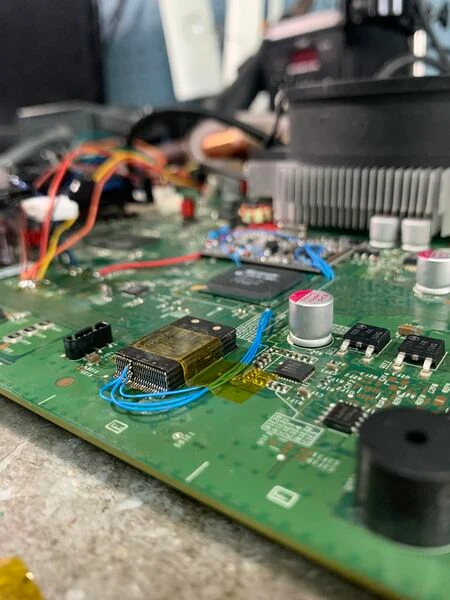
A Nandwich is a method to add more NANDs without the need for a dedicated Multi-NAND board. This is done by stacking multiple NAND chips on-top of each other and using a glitch chip to switch between them. This allows for a theoretical unlimited amount of NANDs (not factoring in electrical limits and GPIO limits).